
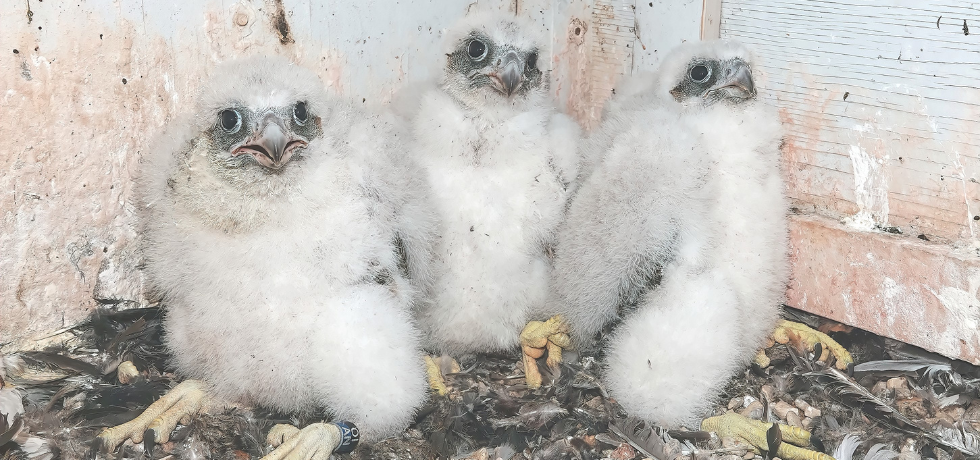
Beak-ing news from We Energies power plants — all seven peregrine falcon chicks hatched this spring have officially been named after Milwaukee news anchors.
Customers were asked to name the world’s fastest animal in honor of the men and women who work tirelessly to bring them the latest news, sports and weather every day.
A record-breaking 30,000 votes were cast in this year’s contest.
We Energies is forecasting a bright future for the chicks born in Oak Creek, Port Washington and Milwaukee. All the chicks officially received their identification bands and, for the first time ever, the falcons have been given location transmitters.
Oak Creek Power Plant
Proud parents Essity and Joel welcomed three chicks. This is their second year nesting together. Their chicks were named:
- “Brian Nestnansky” in honor of Brian Niznansky from TMJ4
- “Mark Birden” in honor of Mark Baden from WISN12
- “Brooke Flighton” in honor of Brooke Brighton from Spectrum News
Port Washington Generating Station
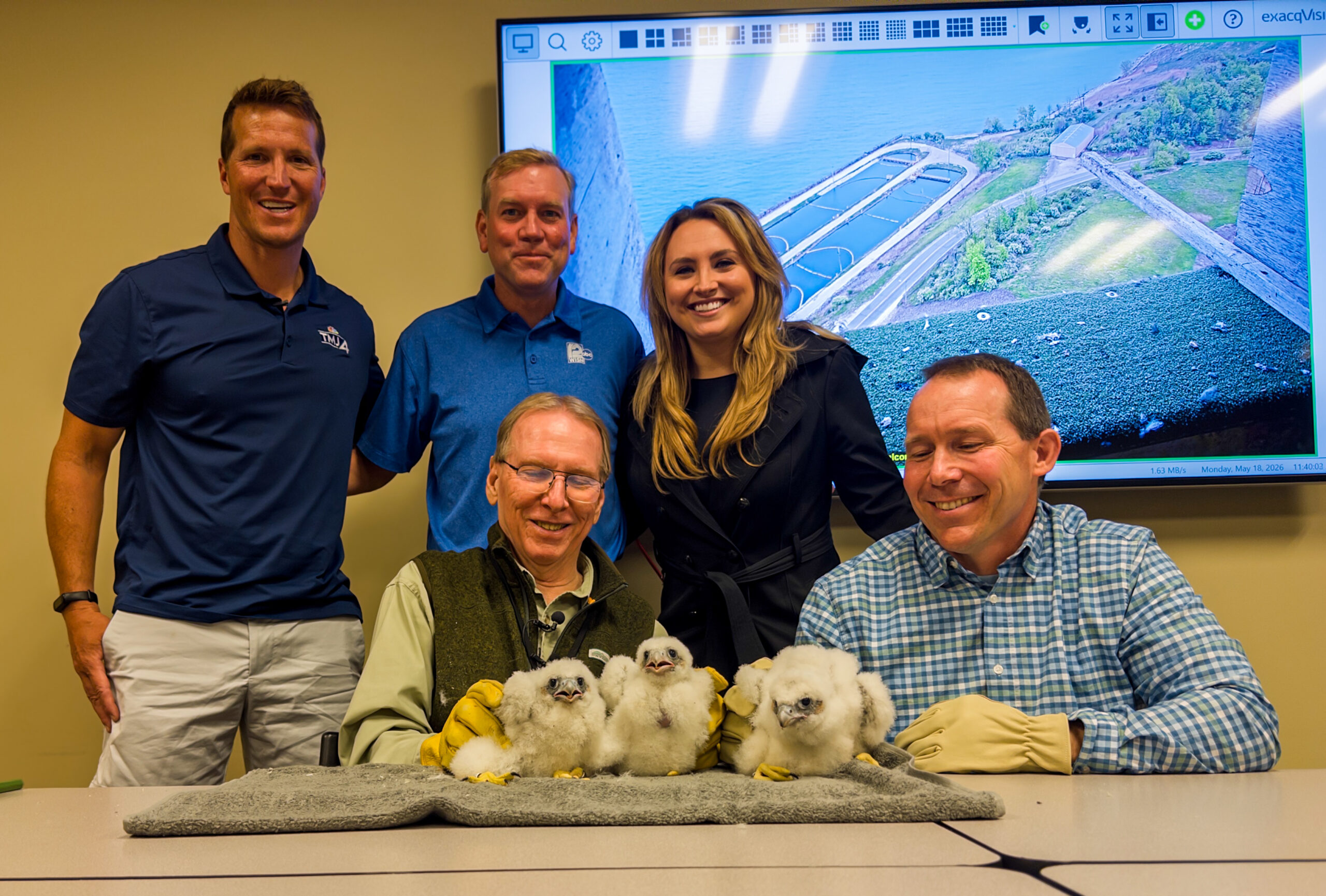
Hamm’s Solo and an unbanded female falcon nested in Port Washington for the second year in a row. Their three chicks were named:
- “Teddie Perrygrine” in honor of Ted Perry from Fox6
- “Gino Falcone” in honor of Gino Salomone from Fox6
- “Flown Mercure” in honor of John Mercure from Newsradio 620 WTMJ
Valley Power Plant
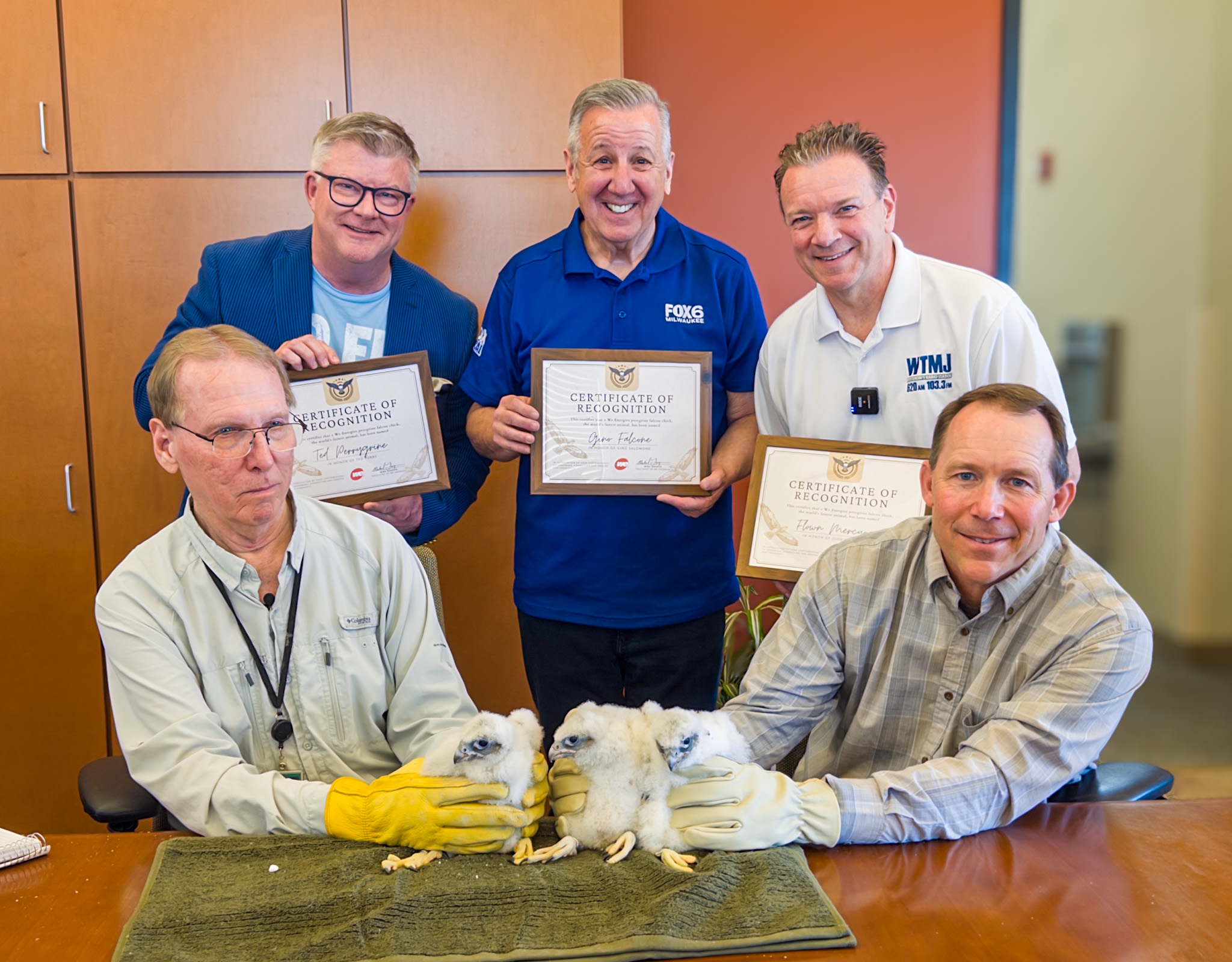
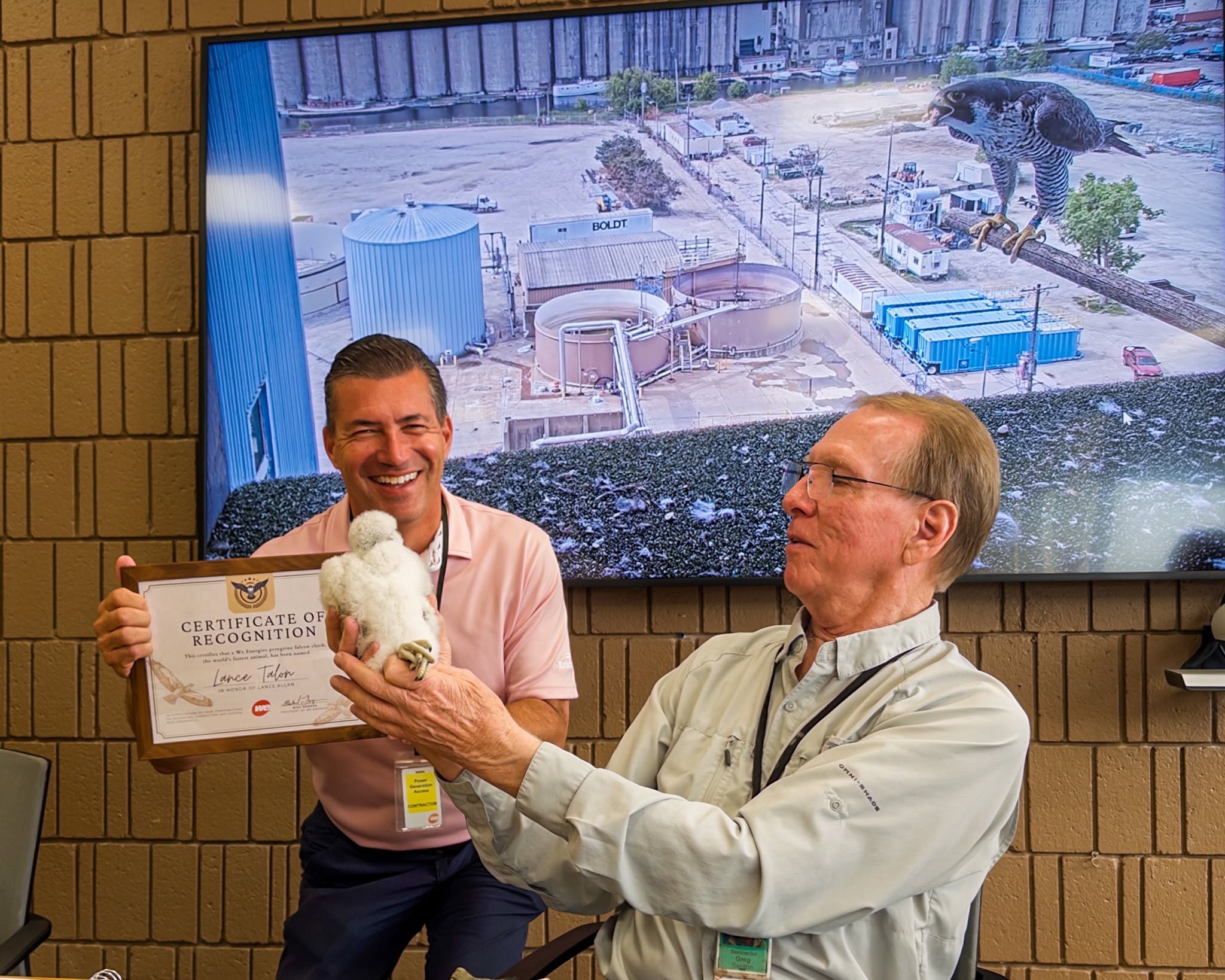
Peregrine falcons Barney and Puck nested for the first time together at the Valley Power Plant in Milwaukee. Just one of their three eggs hatched, and it was named:
- “Lance Talon” in honor of Lance Allan from CBS58
Honorable mention goes to Rob Haswell and Tom Wachs from Fox6. If the remaining two eggs had hatched, those falcons would have been named “Rob Flieswell” and “Tom Squawks.”
About the identification bands and location transmitters
Banding the chicks is a crucial step in peregrine falcon recovery efforts. Every year, the companies’ peregrine falcon manager places small metal bands on the chicks when they’re about three weeks old. The bands identify each falcon by a combination of colors, letters and numbers. This allows experts to determine key facts, like how far falcons are traveling and how long they’re living in the wild.
This year, We Energies placed solar-powered location transmitters on the identification bands. The transmitters use smartphone networks to pinpoint the location of the chicks after they leave the nest.
This is only the second time this technology has been used on peregrine falcons in the United States.
Each transmitter will provide experts with unprecedented data and research opportunities to learn where young falcons go in their first years of life, before they settle at a nest site to lay eggs and raise their own young.
About the peregrine falcon program
Peregrine falcons almost went extinct in Wisconsin due to the extensive use of pesticides following World War II. To support the species’ recovery, We Energies and Wisconsin Public Service (WPS) began installing peregrine falcon nest boxes at power plants in the early 1990s. Since then, 476 peregrine falcons have been named and banded at company facilities — representing 20% of all peregrine falcons hatched in the state. This program is just one way We Energies and WPS are building a bright, sustainable future.