
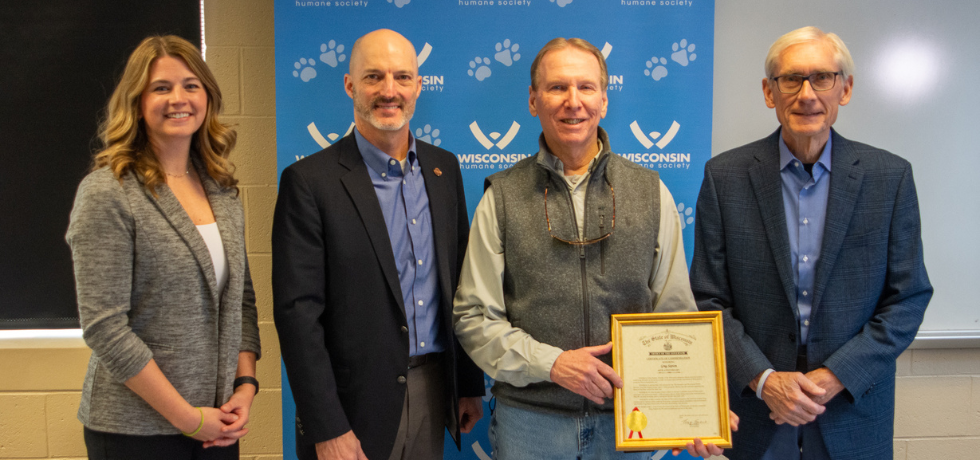
Over the past 40 years, one man has almost singlehandedly brought peregrine falcons back from the brink of extinction in Wisconsin.
Greg Septon founded Wisconsin’s Peregrine Falcon Recovery Project in 1986. To mark four decades of service, We Energies surprised Septon with a special celebration at the Wisconsin Humane Society’s Wildlife Rehabilitation Center.
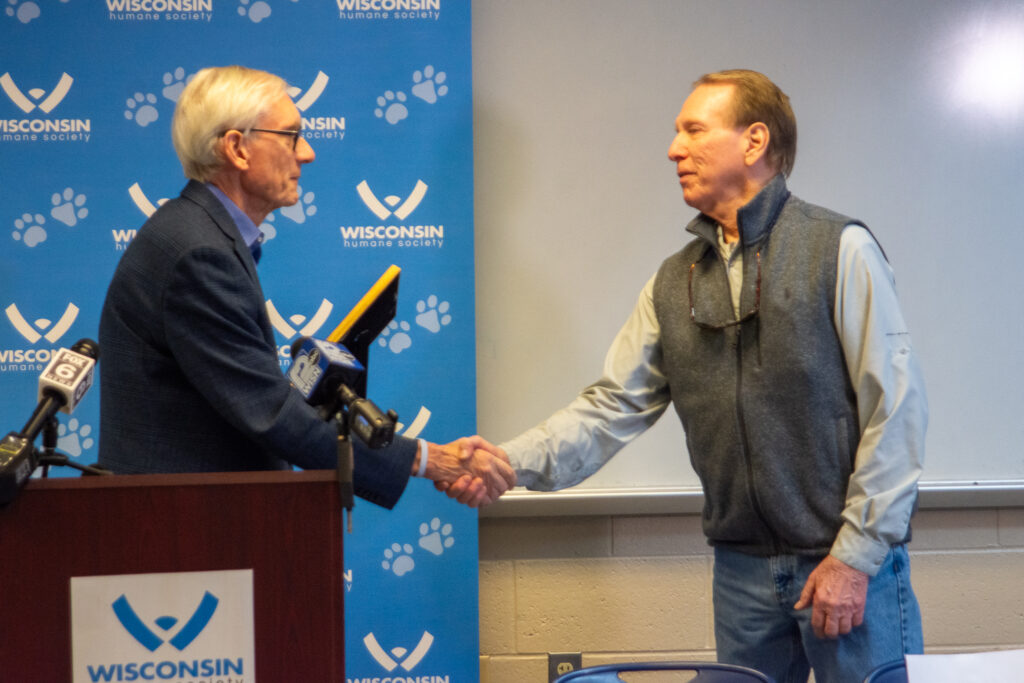
In front of friends and family, Gov. Tony Evers presented Septon with a Certificate of Commendation for his service to the state.
“You may not know this about me, but I’m a bit of a bird guy myself, and one of my favorite things to do with my wife, Kathy, is to visit Wisconsin’s incredible state parks,” said Gov. Evers. “Now, thanks to Greg, there’s a high chance that at one of those places, we’ll be able to see one of those incredible falcons in the wild, and that is something we should all celebrate.”
Peregrine falcons are native to Wisconsin but almost became extinct in the 1960s due to widespread use of the pesticide DDT.
With help from Wisconsin companies like We Energies and Wisconsin Public Service (WPS), Septon released captive-bred peregrine falcons into the wild between 1987 and 1992 and installed nest boxes at buildings across the state.
Since then, all peregrine falcon reproduction in the state has taken place naturally and by wild birds. Today, experts are aware of more than 40 breeding pairs of peregrines statewide, including four pairs at We Energies and WPS power plants.
We Energies and WPS President Mike Hooper thanked Septon for allowing the utilities to be a part of his remarkable journey from the very beginning.
“Greg’s commitment over the past 40 years serves as a remarkable example of how patience and persistence can literally change the world,” said Hooper. “On behalf of We Energies, WPS and our peregrines past and future, thank you, Greg.”
Hooper then revealed one last surprise for Septon — the We Energies Foundation donated $15,000 to name a raptor recovery cage at the Wildlife Rehabilitation Center in Septon’s honor.
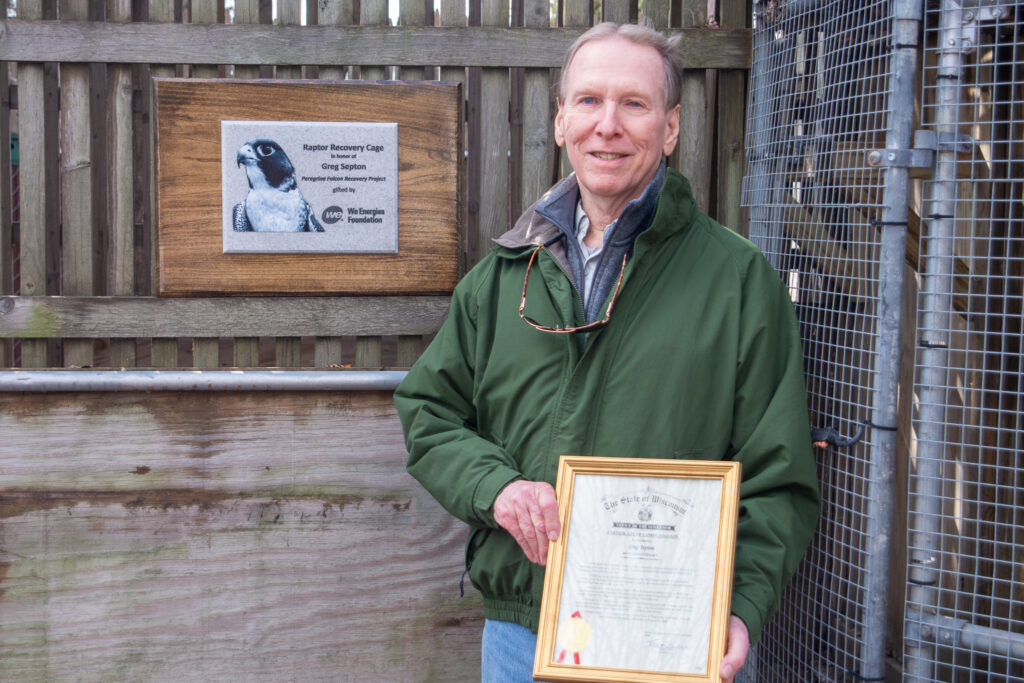
“We are so thankful to We Energies for their ongoing support of our wildlife work and today’s dedication to Greg,” said Alison Fotsch, president and CEO of the Wisconsin Humane Society. “While I haven’t had the great fortune of working with Greg myself, our team describes Greg as an icon in the field. Legendary. Thank you, Greg, for being our greatest resource on peregrine falcons and the work that you have done to change their fate in Wisconsin.”
An emotional Septon said he was speechless but was honored to see so many familiar faces in the crowd, including his wife and daughter.
“Thank you to everyone here, to the folks at We Energies and Wisconsin Public Service, they’ve been here since the very beginning,” said Septon. “Early on, it was a bit of a struggle trying to get buy-in; putting a nest box on a power plant wasn’t a very popular thing to do, but the president of We Energies at the time said, ‘yes, let’s give it a try,’ and everything has worked out wonderfully since then.”
Septon has personally banded the more than 1,500 peregrine falcon chicks produced at nest sites across the state. And he’s not stopping yet. The 2026 peregrine falcon season will kick off later this spring.