
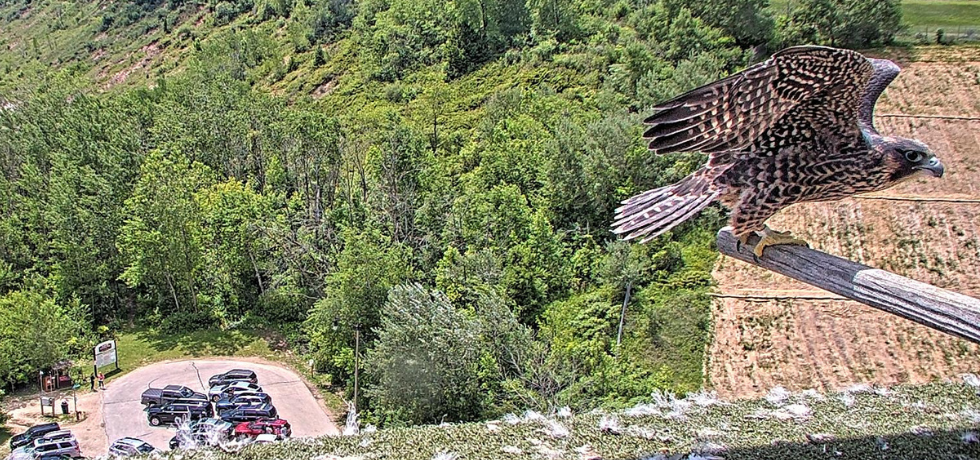
The We Energies peregrine falcon program is making history. Groundbreaking new technology will allow the company to pinpoint the location of its falcon chicks after they leave the nest.
This spring, peregrine falcon manager Greg Septon placed tiny BlūMorpho tags on all the chicks born at We Energies and Wisconsin Public Service (WPS) power plants.
The transmitters are light enough to attach to a butterfly, are powered by the sun and rely on smartphone networks to determine a falcon’s location.
This is only the second time this technology has ever been used on peregrine falcons in the United States. Experts say the research opportunities are endless.
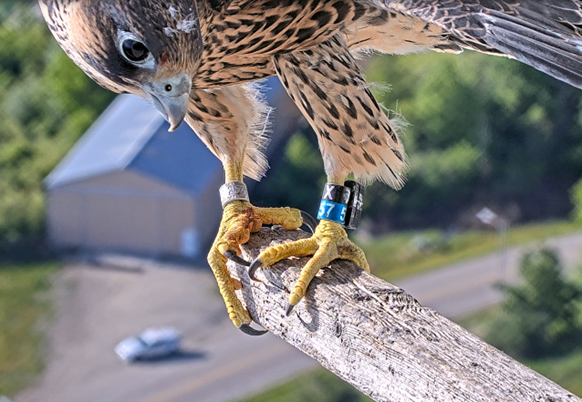
“Before this technology, we had to rely on sightings or photos of identification bands to determine if one of our peregrines was alive and well in the wild. It could take years to get a report of a falcon, if we got one at all,” explained Septon. “With these transmitters, we hope to acquire clearer understanding of where these young falcons go in their first years of life before they settle at a nest site to lay eggs and raise their own young.”
All 11 We Energies and WPS falcons born this spring have officially left their nest boxes. Each raptor was named in honor of news anchors from across Wisconsin.
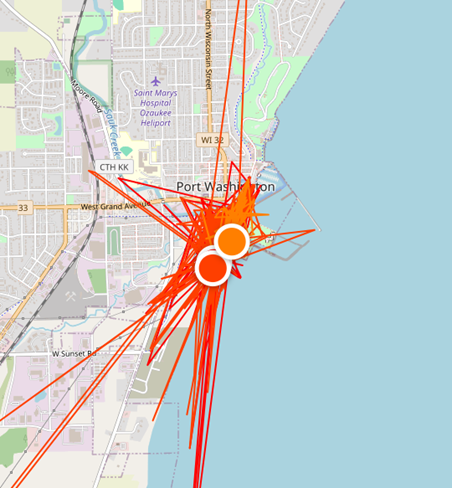
In just the few short weeks since the tags were activated, their signals were detected more than a thousand times. As the image of the tracking data from falcons at the Port Washington Generating Station below shows, the birds are sticking close to their birthplaces for now while they master their flying skills and learn how to hunt their own prey.
But Septon is excited about the data he’ll be able to collect in the months to come.
“This is a dream come true — to be able to safely attach something like this to a young peregrine,” he said. “This is a new chapter for Wisconsin’s peregrine falcon recovery efforts.”
About the peregrine falcon program
Peregrine falcons almost went extinct in Wisconsin due to the extensive use of pesticides following World War II. To support the species’ recovery, We Energies and WPS began installing peregrine falcon nest boxes at power plants in the early 1990s. Since then, 476 peregrine falcons have been named and banded at company facilities — representing 20% of all peregrine falcons hatched in the state. This program is just one way We Energies and WPS are building a bright, sustainable future.